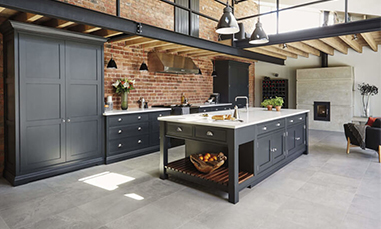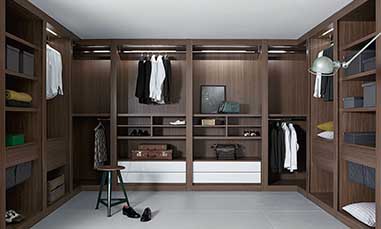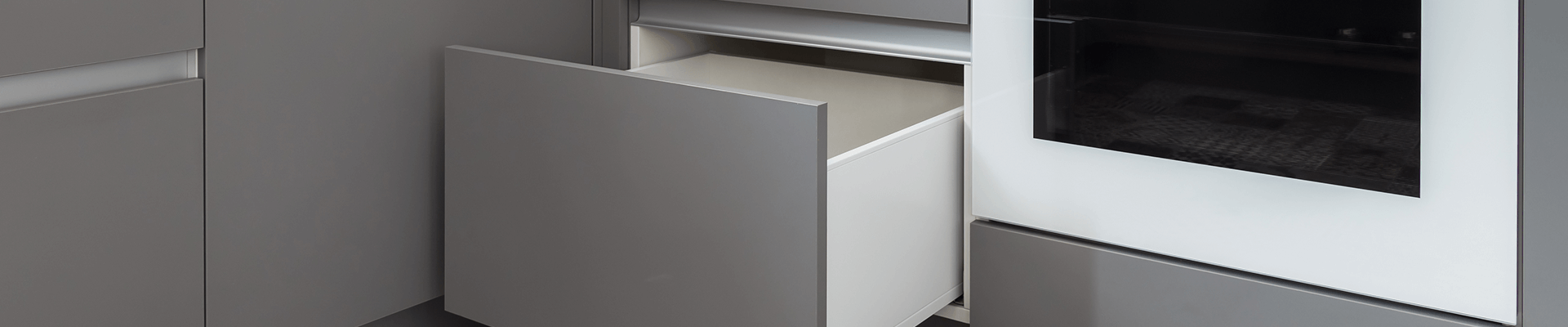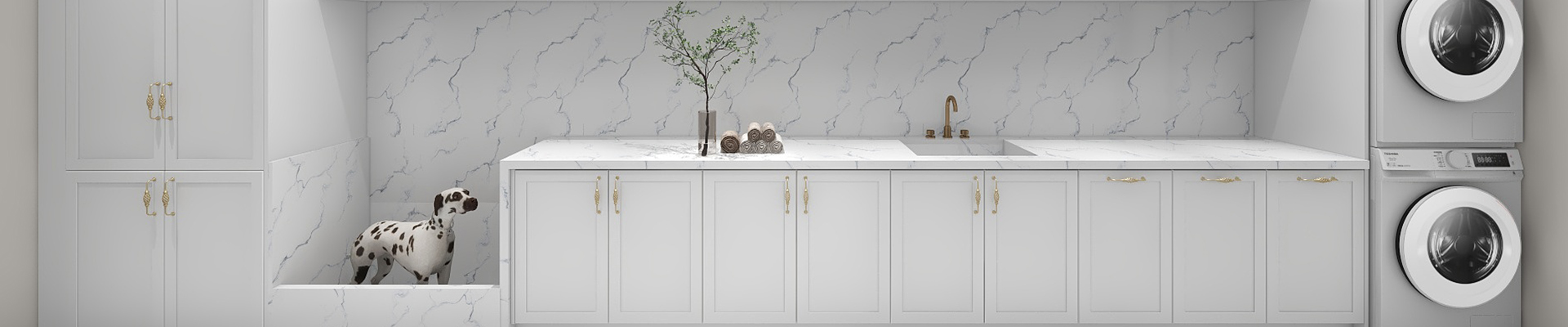



They mean the same object. Cupboard is the British and Australian everyday word; cabinet is American and Canadian, and has become the international trade term. For a specification, neither is precise — write base unit, wall unit or tall unit and the ambiguity disappears.
The split is regional, not technical. A cupboard and a cabinet are the same carcass with the same doors.
In a professional bill of quantities you will see units, not cupboards — base unit, wall unit, tall unit.
Search behaviour follows the language: UK, Australia and India search cupboard; the US and Canada search cabinet.
A page cannot lead with both. Pick one for the title and H1, use the other in body copy where it reads naturally.
If a supplier quotes "cupboards" and the drawing says "units", check whether doors are included — that is where the ambiguity actually costs money.
1. Where the two words come from
A cupboard was originally a board for cups — an open shelf, then a shelved recess with doors. A cabinet was a small private room, then the furniture in it. Both drifted towards "storage with doors", from different directions.
That history explains the modern usage. In British English a cupboard is often built in and holds household things: an airing cupboard, a linen cupboard, a pantry cupboard. In American English a cabinet is any casework with doors or drawers, including the bathroom vanity and the wall units in a kitchen.
| Market | Everyday word | Trade word | Notes |
|---|---|---|---|
| United Kingdom | Cupboard | Unit / kitchen unit | Cupboard often means built-in storage |
| Australia | Cupboard | Cabinet / unit | Both used; cupboard more colloquial |
| United States | Cabinet | Cabinet | Never cupboard in a kitchen context |
| Canada | Cabinet | Cabinet | Close to US usage |
2. Why neither word belongs in a specification
A bill of quantities does not say "cupboard". It says base unit, wall unit, tall unit, or the specific item: sink unit, hob unit, pantry. Those words describe a shape and a position, which is what a factory needs to build.
That is not pedantry. "Cupboard" can mean a carcass with shelves, a carcass with doors, or a complete unit with a benchtop. On an export order, the difference between those three readings is the difference between a container of boxes and a container of finished kitchens.
| Written as | Could mean | Ask instead |
|---|---|---|
| 12 cupboards | 12 carcasses, or 12 complete units | 12 base units, 600 mm, with doors |
| Wall cupboard | Carcass only, or carcass plus door | Wall unit 720 × 300, door included |
| Corner cupboard | A blind corner, or a carousel unit | Corner base with carousel, left-hand |
3. What it changes for search
In the UK, Australia and India, "cupboard" carries meaningful volume — wardrobe cupboard, kitchen cupboard, storage cupboard. In the US it is close to zero; the market searches cabinet, vanity and pantry instead.
That means one page cannot rank for both without reading oddly. A page titled "cupboard vs cabinet" can explain the difference, but a product page has to choose. For a supplier selling into Australia and the US, the practical answer is: lead with cabinet in titles and URLs, use cupboard once or twice in body copy for the UK and AU reader.
4. How to write so nobody has to ask
Name the form and the dimension: base unit 600 mm, wall unit 720 × 350, tall unit 2100. Add the door type and the finish. That is a specification; "cupboard" is a category.
If you are quoting to a client who uses the other word, mirror it in the covering letter and keep the drawing neutral. The client hears their own vocabulary, the factory reads a dimension — and nothing gets built twice.
5. The one place the confusion costs money
When a quote says "cupboards" and the purchase order says "units", the question of whether doors, hinges and shelf pins are included is genuinely open. We have seen both readings on the same job.
The fix is a line item breakdown: carcass, doors, hardware, benchtop, kickboard, packed separately. Once the quote is broken down that way, the word at the top of the page stops mattering.
Frequently asked questions
Is a cupboard the same as a cabinet?
Physically yes — same carcass, same doors. The difference is regional vocabulary, not construction.
Which word should I use on a website?
Lead with cabinet if you sell internationally or into the US. Use cupboard in body copy if the UK or Australia is a main market.
Why do drawings say "unit" instead of either word?
Because a unit describes a shape and a position — base, wall, tall — which is what a factory needs. Cupboard and cabinet describe a category.
Does the word affect what is included in a quote?
It can. "Cupboard" may mean carcass only or a complete unit. Ask for a line item breakdown: carcass, doors, hardware, benchtop.
Is "cupboard" wrong in the US?
It is understood but not used for kitchens. Americans say cabinet, vanity or pantry, and a US buyer reading "cupboard" will assume you are not local.