UAE projects buy from China on FOB terms and clear through Jebel Ali in 18–25 days. Duty is low at 5%, so the cost story is simple. The work is in conformity documents, Arabic labelling and the free-zone route, which decides whether goods enter the local market or move on to another GCC country.
Jebel Ali transit is 18–25 days; the free zone allows duty deferral and re-export.
Duty is 5% under the GCC common tariff; confirm the tariff line.
Conformity certificates and Arabic labelling are the two document risks.
VAT is 5%, usually recoverable but a cash-flow item.
Missing conformity documents, not freight, cause most delays.
1. What UAE buyers actually verify
UAE buyers verify conformity, labelling and the import route. Conformity certificates sit with ESMA or MOIAT depending on the product; Arabic labelling is generally required for consumer goods; and the route decides whether duty is paid on entry or deferred through a free zone. A factory that has shipped to the Gulf usually understands the last point.
2. Four sourcing routes compared
| Route | What you buy | Lead time | Best for |
|---|---|---|---|
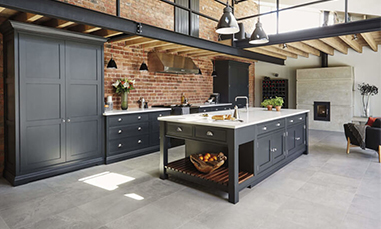
| Direct factory FOB | Custom cabinets to your spec | 16 weeks | Hotel and residential towers |
| Jebel Ali stock | Standard sizes from a free-zone warehouse | 2–4 weeks | Fit-out fill-ins |
| Local distributor | Branded cabinets, installed | 6–8 weeks | Villas and retail |
| Hybrid | Factory boxes, local fronts | 12–14 weeks | Design-led hospitality |
The free-zone route is the main local variation: it defers duty and allows re-export to Saudi Arabia or other GCC markets without paying duty twice.
3. Five documents to request before deposit
Conformity certificate or scope statement
Arabic label artwork
Board emission report and board grade
Shop drawing sample for one typical unit
Pre-shipment inspection scope and checklist
The conformity scope statement is the one to get early. It decides whether the product can enter the local market or must go through a free zone.
4. Where the money goes per unit
| Cost line | Share of landed cost |
|---|---|
| Factory price | 60–70% |
| Freight and insurance | 6–10% |
| Duty | 5% |
| Clearance and delivery | 5–8% |
| Installation | 12–18% |
Duty is low, so the factory price dominates. That makes specification discipline more valuable than freight negotiation on this route.
5. Shipping and clearance into the UAE
| Port | Best for | Transit |
|---|---|---|
| Jebel Ali | Dubai, northern emirates, re-export | 18–25 days |
| Khalifa | Abu Dhabi | 20–27 days |
| Sharjah | Sharjah and northern emirates | 18–25 days |
Clearance is usually one to three days for a clean entry. Missing conformity documents or Arabic labelling are the common causes of delay. Confirm the packaging standard before loading, because heat and humidity are harder on cartons than on the cabinet.
6. Installation and defect management
UAE installation is usually subcontracted and runs to a tight handover date. Heat and humidity affect adhesives and cartons, so store indoors and install after the air conditioning is running. Photograph damaged cartons before opening, and keep a spares pack for each unit type.
7. Vetting a factory in 12 checks
Business and export licence
Conformity capability and experience
Arabic label artwork
Hardware brand authorisation
Shop drawing capability
Edge banding line
Packing standard for hot, humid routes
Container loading photos
Gulf shipment references
Inspection history
Lead time record
After-sales response
8. A schedule that holds
| Week | Milestone |
|---|---|
| 1–2 | Drawings, approval, deposit |
| 3–9 | Production and in-line checks |
| 10 | Pre-shipment inspection |
| 11 | Loading and export clearance |
| 12–14 | Sea freight to Jebel Ali |
| 15 | Customs and conformity clearance |
| 16 | Installation and snagging |
The risk is documentation, not freight. If conformity is not confirmed by week two, the container can arrive before the paperwork.
9. Common mistakes on a first shipment
Three mistakes show up on almost every first shipment. The first is a certificate that names the factory but not the board grade. The second is a quote that leaves out duty and VAT. The third is a drawing approved after production starts, which moves every later date. Each is cheap to prevent and expensive to fix.
10. What to put in the purchase order
The purchase order should state the board grade, hardware model, door finish, packing standard and inspection scope. It should also name the Incoterm, the port and the party responsible for conformity certification. A PO that lists only sizes and colours leaves the important terms to interpretation. Attach the hardware specification and the packaging standard as annexes.
11. Lead time and cash
Most factories ask for 30% deposit and the balance before loading. That means cash leaves your account roughly ten weeks before the container arrives. Model the working capital, not just the unit price, and hold back a retention until the pre-shipment inspection is signed off. The landed cost guide shows how to include the financing cost.
12. A worked example
Take a 60-unit apartment kitchen with a cabinet value of about $180,000 FOB. Freight adds 8–12%, duty and VAT adds its share, and installation adds 10–18% of the installed cost. The factory price is roughly two-thirds of the landed total; everything else is the route. Two ports can move the same cabinet by several hundred dollars per unit, which is why the route decision should come before the factory negotiation. Run the numbers in the landed cost guide before asking for a second factory quote.
Frequently asked questions
What conformity documents are needed for the UAE?
Products in scope need a conformity certificate and may need registration with ESMA or MOIAT. Confirm the scope with your importer, because the requirements differ by product category.
Is Arabic labelling required?
Consumer products generally require Arabic labelling, often alongside English. For project supply the buyer may specify the format, so confirm before printing.
How much duty do I pay?
The GCC common customs tariff is 5% on most goods. Some products carry a higher rate, so confirm the tariff line before pricing.
Why is Jebel Ali popular?
It is the largest port in the region, has direct connectivity to China and a free zone that allows re-export and duty deferral. Transit is typically 18–25 days.
Does VAT apply in the UAE?
VAT is 5% and applies to most goods and services. It is usually recoverable for registered businesses but affects cash flow.
How long does clearance take?
A clean entry is usually one to three days. Missing conformity documents or labelling issues are the common causes of delay.