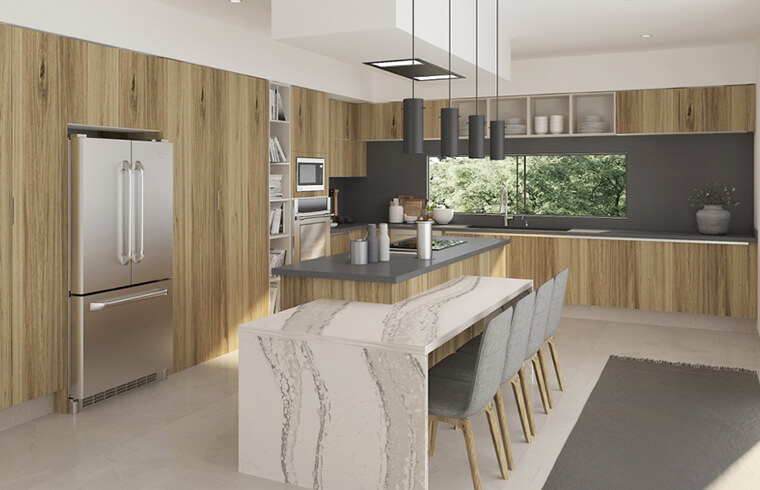
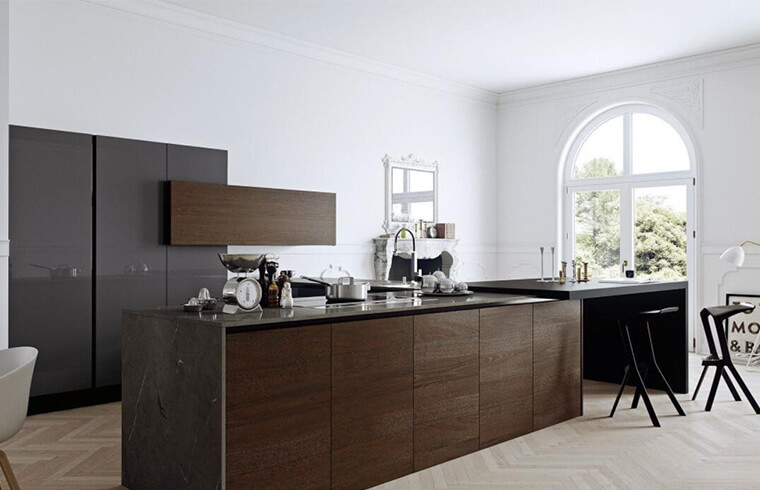
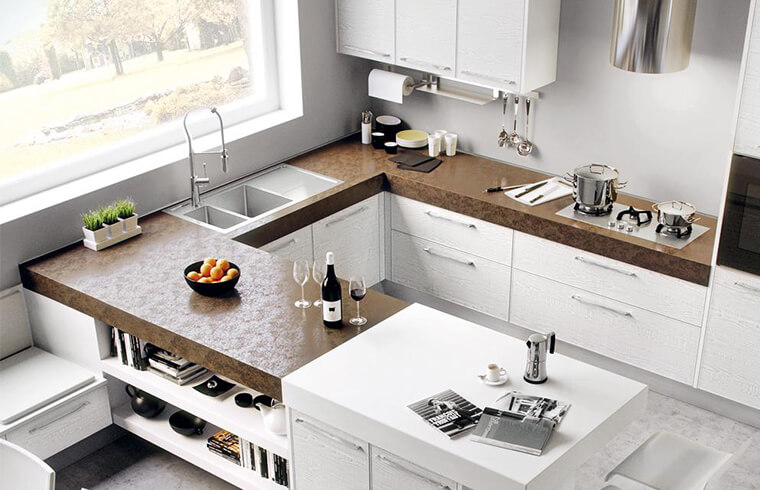
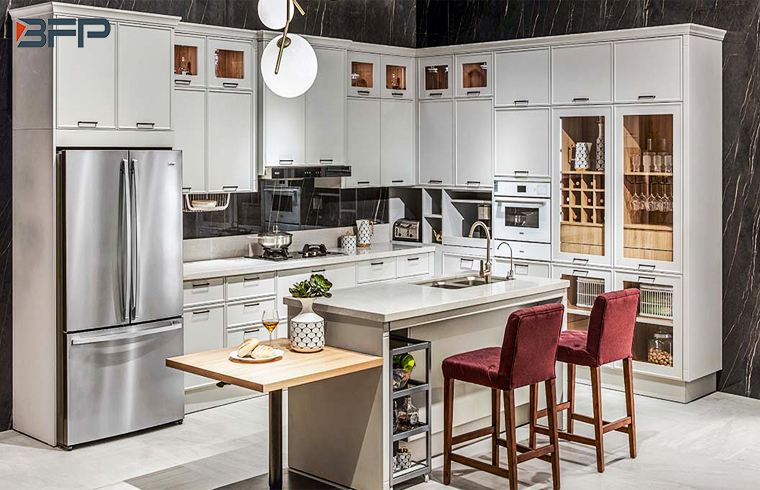
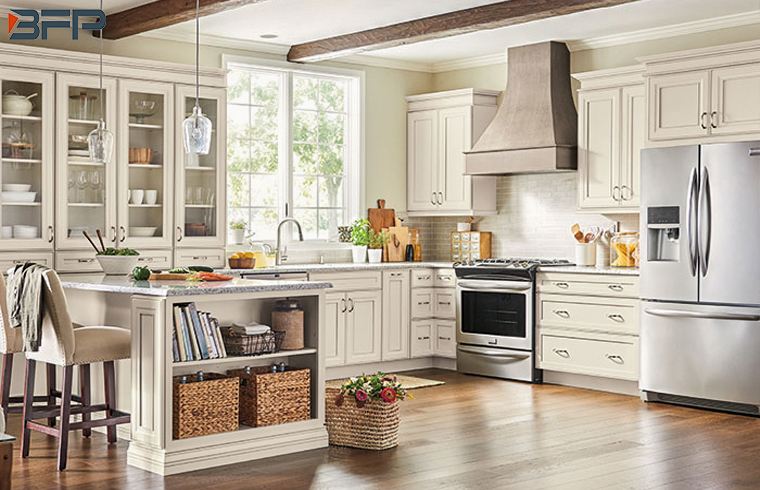
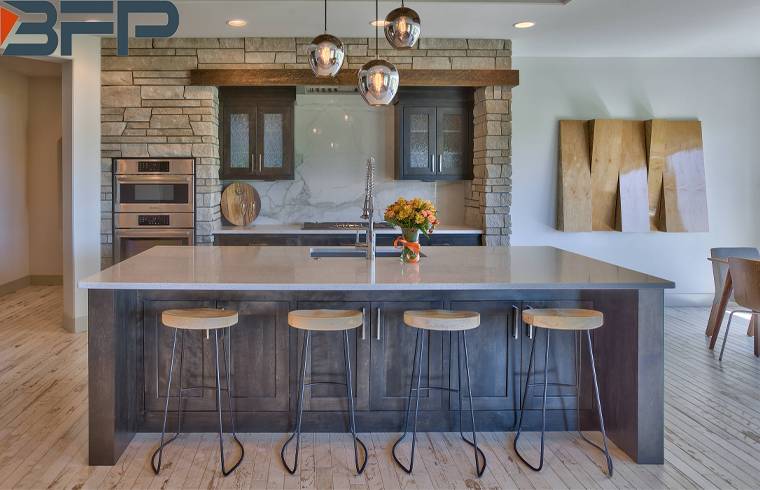
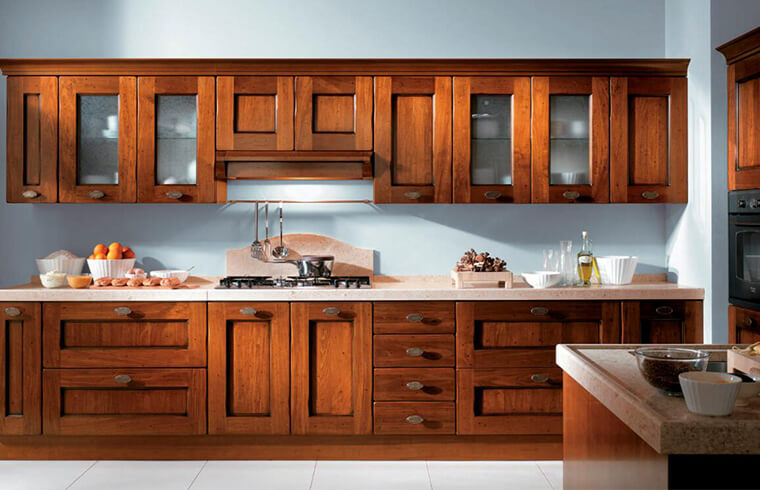
When choosing kitchen cabinets for a residential project or large-scale development, moisture resistance is often one of the most important factors. Kitchens are exposed to steam, water splashes, cleaning chemicals, and daily temperature changes. Because of this, many buyers compare solid wood kitchen cabinets and PVC kitchen cabinets before making a decision. While both materials are widely used, their performance in humid environments is very different. Understanding these differences can help developers, contractors, and importers choose the right solution for long-term use.
To begin with, moisture is one of the main reasons kitchen cabinets fail over time. Even in modern homes, cabinets are constantly exposed to steam from cooking, water from sinks, and high humidity in closed kitchen spaces. If the material cannot handle moisture well, it may expand, crack, warp, or lose its appearance. For large apartment projects or rental housing, these problems can lead to high maintenance costs and customer complaints. That is why many buyers focus on moisture-resistant kitchen cabinets rather than only appearance or price.
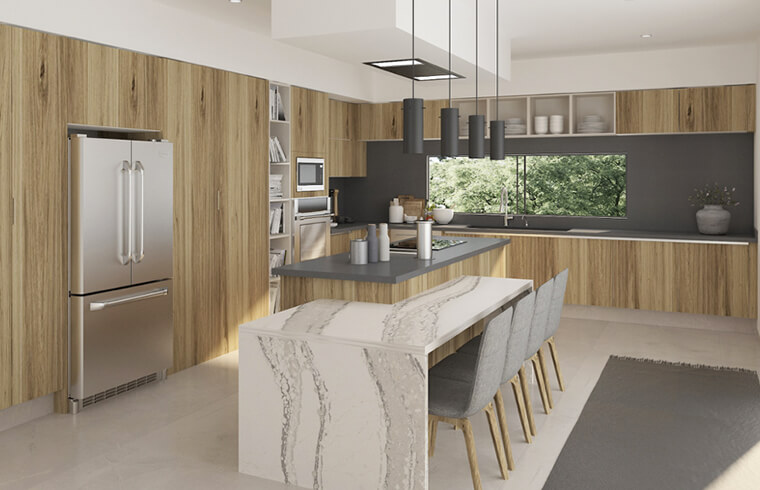
First of all, solid wood kitchen cabinets are made from natural wood such as oak, maple, walnut, or other hardwood materials. These cabinets are often used in high-end homes because they offer a natural look and long-term durability. Solid wood has a strong structure and a classic appearance that many homeowners prefer.
However, at the same time, wood is a natural material that reacts to its environment. It absorbs moisture when humidity is high and releases moisture when the air is dry. Because of this natural behavior, solid wood cabinets usually require good sealing, stable indoor humidity, and proper maintenance. Without these conditions, the material may expand or shrink over time.
On the other hand, PVC kitchen cabinets are made using PVC boards or panels with a waterproof surface. PVC is a non-absorbent material, which means it does not take in water like wood does. For this reason, PVC cabinets are often described as waterproof and moisture-proof.
In addition, PVC cabinets are widely used in projects where humidity is high or where the budget needs to be controlled. They are common in rental apartments, small residential projects, and coastal areas. Because PVC is more stable in humid environments, many developers choose this material when they need durable kitchen cabinets with low maintenance.
Before comparing the two materials directly, it is important to understand how moisture damages cabinets. In most kitchens, humidity levels change every day. Cooking creates steam, cleaning adds water, and poor ventilation increases humidity. Over time, these conditions can cause serious problems if the cabinet material is not stable.
For example, wood can absorb moisture and become slightly larger. Later, when the environment becomes dry, it may shrink again. This repeated expansion and contraction can affect the cabinet structure. On the contrary, non-absorbent materials like PVC remain stable because they do not react to humidity in the same way. Therefore, moisture resistance is not only about water splashes but also about long-term environmental stability.
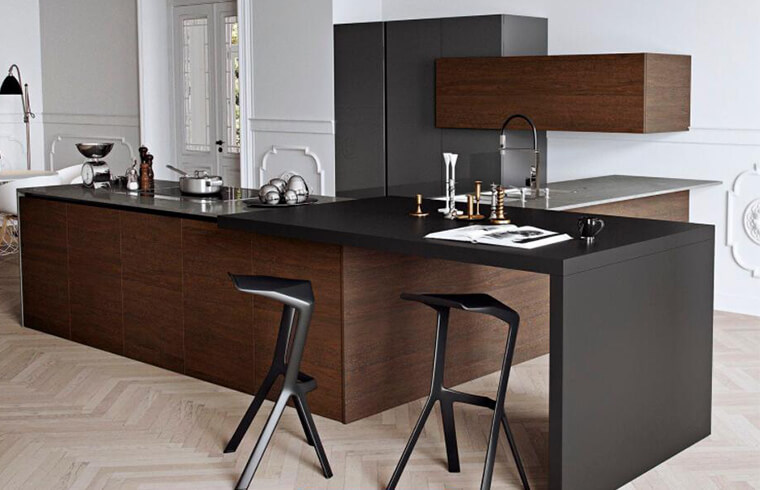
Now let us compare the two materials directly to see which one performs better in humid conditions.
To start with, PVC has a clear advantage in terms of water resistance. PVC boards do not absorb water, so they do not swell or deform when exposed to moisture. Even in areas close to sinks or dishwashers, PVC cabinets can remain stable for a long time.
In contrast, solid wood naturally absorbs moisture. Although protective coatings and finishes can reduce this effect, they cannot completely stop it. If the surface coating becomes damaged or worn, moisture can easily enter the wood.
Next, in environments with high humidity, PVC kitchen cabinets usually perform better. They remain stable even in areas with constant steam from cooking. This makes them a practical choice for kitchens in coastal cities or humid climates.
On the other hand, solid wood cabinets can still work well, but they need controlled indoor conditions. If the humidity level changes frequently, the material may expand or shrink, which can affect the cabinet doors and structure.
Another important factor is long-term stability. PVC cabinets are less likely to warp because the material structure does not change when exposed to moisture. This is especially useful for large projects where long-term performance is important.
Meanwhile, solid wood cabinets can still last many years, but they need proper protection and maintenance. Without good sealing and stable humidity, there is a higher risk of slight warping or surface damage over time.
Finally, PVC also has an advantage in terms of moisture-related problems such as mold or insects. Because it is not an organic material, it does not support mold growth easily and is naturally resistant to termites.
In comparison, solid wood is an organic material. If it stays damp for a long time, it may be affected by mold or insects. This does not mean wood is not durable, but it does require more attention in humid environments.
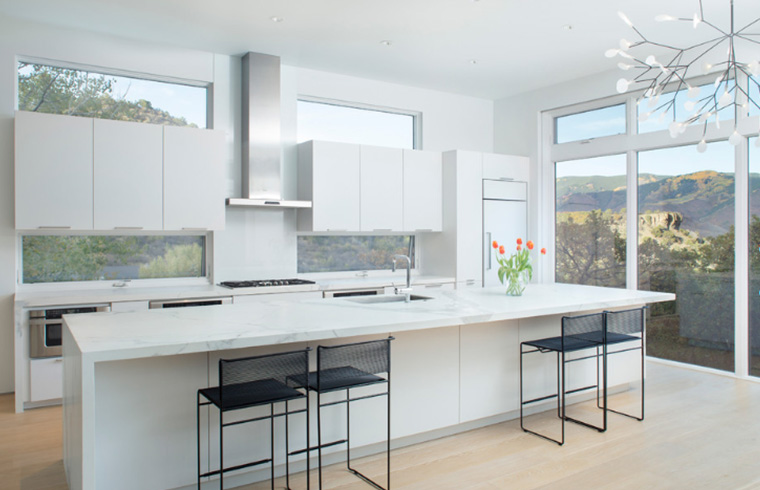
After comparing the two materials, it becomes clear that PVC cabinets are the better option in certain situations. For example, in high-humidity areas such as coastal cities or tropical climates, PVC cabinets provide more reliable performance. They are also suitable for rental apartments where low maintenance is important.
In addition, projects with limited budgets often choose PVC because it offers good moisture resistance at a lower cost. For large residential developments, this can help reduce long-term maintenance problems while keeping the overall cost under control.
However, this does not mean PVC is always the best solution. In high-end residential projects, solid wood kitchen cabinets still have strong advantages. They offer a natural appearance, strong structure, and long-term value that many homeowners prefer.
If the project is located in a region with stable indoor conditions and good ventilation, solid wood cabinets can perform very well. With proper finishing and maintenance, they can remain durable while also providing a premium look that PVC cabinets cannot fully match.

Therefore, the best choice depends on the project environment rather than simply comparing materials. For example, in large apartment projects where cost control and moisture resistance are the main priorities, PVC cabinets are usually the safer choice. On the other hand, for high-end residential homes where design and quality appearance are more important, solid wood cabinets may be more suitable.
In addition, developers and contractors should also consider factors such as project location, humidity levels, budget, and long-term maintenance requirements. By looking at these factors together, it becomes easier to select the right kitchen cabinet material for each project.
In conclusion, when the comparison focuses only on moisture resistance, PVC kitchen cabinets clearly perform better than solid wood cabinets. PVC does not absorb water, remains stable in humid environments, and requires less maintenance. This makes it a practical solution for large projects, rental apartments, and humid climates.
However, solid wood kitchen cabinets still remain an excellent choice for projects that require a premium appearance and long-term value. The most important step is to choose the material based on the project environment and usage requirements rather than simply following trends.
If you are planning a residential or commercial project and are not sure whether solid wood kitchen cabinets or PVC kitchen cabinets are the better option, BFP can help. Our professional team provides design solutions, cost evaluation, and detailed production drawings to make sure every project runs smoothly.
Whether you need durable kitchen cabinets for apartment projects or high-quality custom cabinets for residential developments, BFP can provide the right solution based on your budget and project requirements. Feel free to contact us to get material recommendations, samples, and a professional quotation for your next kitchen cabinet project.


We employ cookies to analyze website traffic and enhance your browsing experience. Data securely aggregated, privacy protected. See Privacy Policy for details.