


For humid interiors, specify PVC kitchen cabinets by door construction, carcass material and water exposure. PVC film can protect the covered face of a door, while the edges, reverse face, drilled holes and cabinet base still need their own details. In sink units, laundries and coastal sites, review the complete assembly and the hardware before you compare prices.
Use a door schedule and a separate carcass schedule. Write down what PVC covers.
Assign splash, heat, condensation and salt exposure to the affected cabinet runs.
Ask for board swelling data, finished-edge sample checks and hardware evidence as separate records.
Compare quotes using the same construction, packing basis and replacement scope.
How moisture damages cabinets
Start with the water source. High air humidity, condensation, a slow leak and repeated splashing create different loads. Check sink cut-outs, dishwasher-side panels, bottom edges, hinge cups and plinths. In a laundry, also inspect the washer connections and any panel close to the floor.
Board swelling. Water entering an exposed wood-based core can thicken the edge and change door alignment. A visibly swollen panel often needs replacement after the leak is fixed. Bond failure. A lifted film or edge band can admit water. Check the core and the bond before agreeing to repair or replace the part. Hardware corrosion. Rusted screws or hinges can often be replaced separately if the fixing holes and supporting board remain sound.
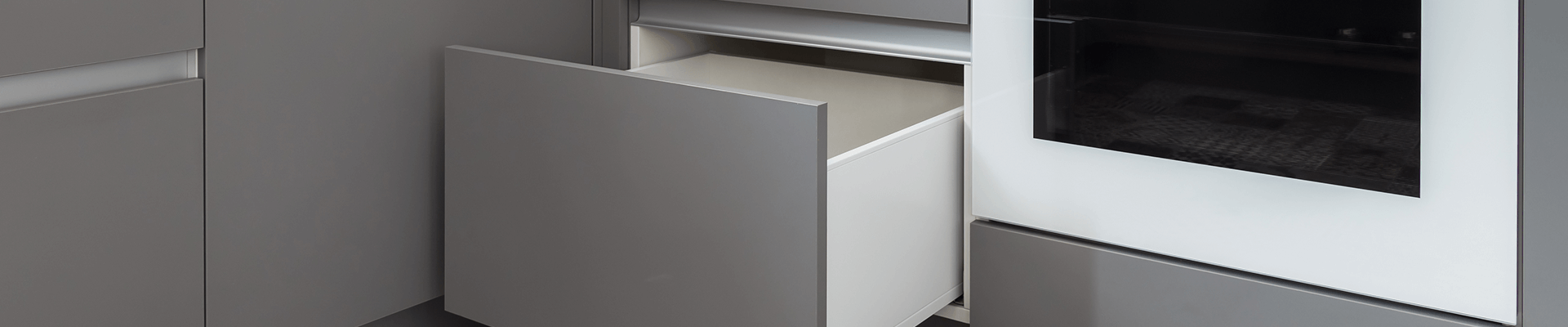
Check the door and carcass as separate assemblies. BFP’s PVC kitchen example lists 18 mm MDF doors with a PVC finish on both faces and an 18 mm melamine-faced particleboard carcass. The door specification therefore tells a buyer little about how the cabinet base will behave under a sink leak.

BFP PVC kitchen example. The published door and carcass specifications identify different constructions.
How PVC, melamine, HPL and lacquer compare
Cabinet quotes often use “laminate” loosely. Here, melamine means a thermally fused decorative face and HPL means a separately made high-pressure laminate bonded to a panel. PVC refers to film-finished doors, and lacquer is a cured coating. If a quote offers solid or foamed PVC board, identify that construction separately.
| Finish | Construction | Where to check and quote |
|---|---|---|
| PVC film | Bonded film over a shaped or flat door substrate. | Check the wrap return, back, cut-outs, heat limits and replacement lead time. |
| Melamine | Thermally fused decorative face on board. | Check both faces, edge bands, penetrations and which board grade the price includes. |
| HPL | Separate high-pressure laminate bonded to a panel. | Check both faces, bonded edges and joints. Ask for the grade and wear evidence for busy surfaces. |
| Lacquer | Cured coating applied to a prepared substrate. | Check the coating schedule, bottom edge, back and grip routes. Confirm colour matching and repair. |
Compare water absorption and thickness swelling only where the reports cover equivalent specimens and exposure conditions. Abrasion, sunlight exposure and fungal resistance also need their own evidence when they matter. Ask each bidder what happens after face damage. A wrapped or laminated front often needs a replacement if the visible finish cannot be matched after repair.
For examples of the product categories, see BFP PVC and vinyl kitchen cabinets and the PVC versus laminate comparison.

BFP Shaker-style PVC kitchen. Approve the finish on the proposed door profile and back return.
What moisture and corrosion evidence to request
Board report. Ask for the board maker, grade, thickness, test method and measured result. BS EN 317 covers thickness swelling after immersion for specified panel types. If two suppliers quote a 24-hour result, compare the conditioning, exposure method and sample preparation before ranking their numbers. Thickness swelling is the increase in thickness divided by the starting thickness, expressed as a percentage. For example, a change from 18.00 mm to 18.54 mm is 3%. This is a calculation example.
Finished sample. Use a representative front and cabinet detail. Document the film or facing, back, edge or wrap return, and drilled openings. Agree a repeatable exposure based on the intended use and record edge lift, blistering and thickness change at agreed points. A shop mock-up and a board laboratory report answer different questions.
Fungi and hardware. For a mould-resistance claim, ask what was tested and under which method. ASTM G21 addresses synthetic polymeric materials. A film report covers the tested specimen, while cleanliness, ventilation and moisture still matter in service. For hinges, runners and screws, ask for the part numbers, test method, hours and acceptance result. ISO 9227 specifies salt-spray test procedures. Use like-for-like results to compare the quoted parts.
Check the report issuer and number, edition, date and specimen identity. If the tender requires independent testing, confirm the lab scope and ask whether it can verify the report. Record approved substitutions and retain a signed reference sample.
How to specify cabinets by climate and room
Use site exposure to choose the details. The three project regions below are planning examples. Actual risk depends on the unit’s ventilation, building envelope, appliance layout and distance from salt exposure.
| Project setting | Exposure to check | Details to specify |
|---|---|---|
| Coastal Australia | Salt exposure near open windows, condensation and splash near sinks. | Specify corrosion evidence for fittings and screws in exposed areas. Check sink edges and plinth protection. |
| Gulf projects | Appliance heat and condensation near cold services or during intermittent air-conditioning. | Confirm heat clearances, adhesive limits and sealed pipe penetrations. Detail any cabinet next to a cold wall. |
| Caribbean projects | Persistent humidity, ventilation interruptions and salt where coastal. | Prioritise drying paths, leak access, sealed edges and hardware rated for the specified exposure. |
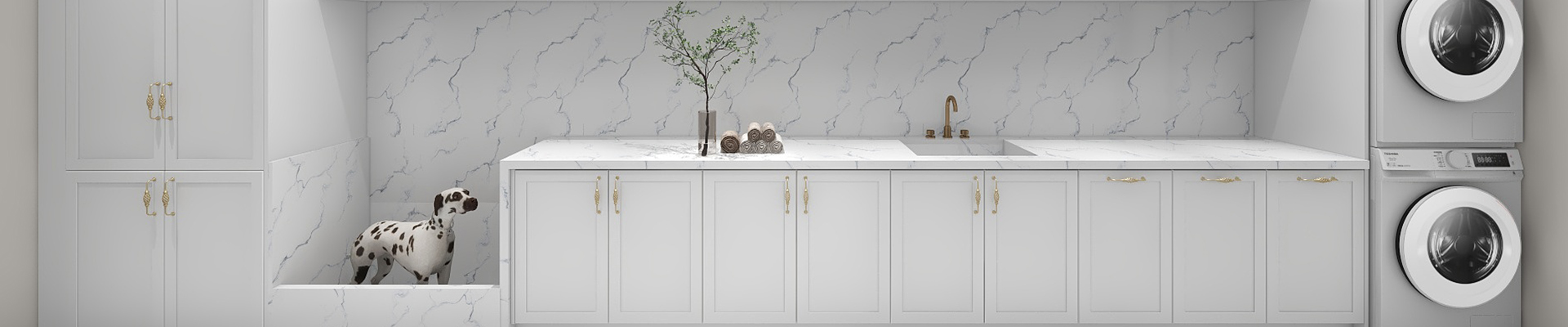
In the kitchen, detail sink cut-outs, dishwasher steam protection and heat clearance to manufacturer instructions. In a laundry, focus on hoses, access for leak checks, plinth protection and drying paths. See BFP laundry and linen cabinets and the material and finish guide when assembling the schedule.

Installed cabinetry from BFP’s South Australia apartment project, included as a room-planning reference.
How to compare cost, lead time and shipping
Send the same door schedule, box construction, finished edges and hardware list to each bidder. Ask for a door price on identical profiles and a separate price for the wet-zone carcass, plinth and hardware upgrades. Make sink leak protection and spares visible line items. A plain melamine front, a routed PVC front and custom lacquer can have different cost drivers, so rank actual quotes for the same scope.
Ask for the minimum order by finish, sample and approval time, production lead time after sign-off, and replacement-door lead time. For freight, request packed dimensions, carton counts and the supplier’s loading plan. Compare flat pack and assembled cases on packed volume, handling and site assembly labour. See BFP packing and shipping for the packing options.
Frequently asked questions
Are PVC kitchen cabinets waterproof?
PVC film protects the covered face. The complete cabinet also has a core, reverse face, seams and openings that can admit water. Ask for a section drawing and a finished sample showing how those details are protected.
Should I choose PVC or HPL for a humid kitchen?
Choose after checking the door profile and exposure. Compare the proposed edge, back and core on samples of both builds. For high-wear flat surfaces, ask for the HPL grade and wear evidence. For routed PVC doors, check the wrap return and heat limits.
Can I use the same cabinet specification in a wet laundry?
Review it against hoses, standing water, floor cleaning and drying conditions. Detail pipe openings, the plinth and the lower cabinet edges, and leave access for leak inspection.
What should I send to get comparable prices?
Send quantities and drawings, the door and carcass schedule, wet-zone and heat details, hardware requirements and the packing basis. Ask each supplier to list exclusions, minimum orders by finish and lead times after approval.