MOQ is usually one 20 ft container, not a fixed number of cabinets. Depending on unit size, that is about 30–50 units. Stock items can have a lower minimum, and standard sizes are sometimes negotiable. Custom sizes need the container, which is why small projects combine rooms or phases rather than over-order.
MOQ is usually one 20 ft container, or 30–50 units equivalent.
Stock items can have a lower MOQ than custom sizes.
Standard sizes are more negotiable than custom ones.
Combine rooms or phases to reach MOQ, not by over-ordering.
Below MOQ, expect a setup fee or a higher unit price.
1. What MOQ means
MOQ is the smallest order a factory will accept. For cabinets it is usually expressed as a container, because the factory plans production around container loads, not single units. A 20 ft container is the common minimum; a 40 ft high-cube is the common economic order.
2. MOQ by order type
| Order type | Typical MOQ | Note |
|---|---|---|
| Custom sizes | 1 × 20 ft container | 30–50 units equivalent |
| Standard sizes | Lower, negotiable | May join another run |
| Stock items | 2–4 weeks supply | From a local warehouse |
| Sample order | 1 unit | Paid, not free |
The container is the real unit. A 20 ft holds fewer units than a 40 ft high-cube, so the unit equivalent changes with the cabinet size and the packing format.
3. How MOQ is calculated
The factory calculates MOQ from production setup, material minimums and container economics. A custom door profile needs a setup run; a standard profile does not. That is why standard sizes are more negotiable than custom ones. The landed cost guide shows how setup cost spreads across units.
4. When MOQ is negotiable
Three situations make MOQ negotiable: standard sizes, a quiet production schedule, and a larger programme that the order is part of. A factory may accept a smaller first order to win the programme. Ask before assuming, and get the answer in writing.
5. Combining rooms or phases
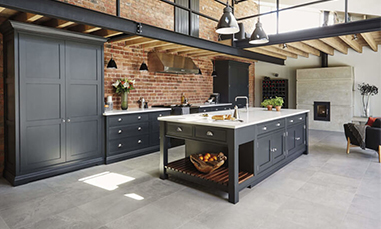
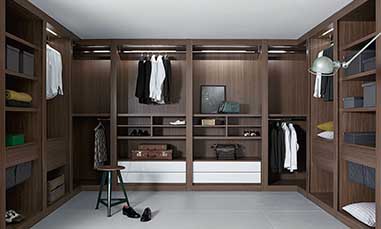
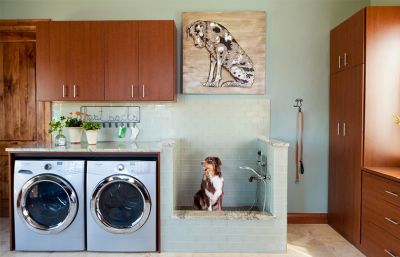
A small project can reach MOQ by combining kitchen, wardrobe, vanity and laundry in one order, or by combining phases. The risk is storing cabinets for a later phase. Storage cost and damage risk should be counted against the saving.
6. Sample orders
A sample order of one unit is possible but usually paid at a premium. It is worth it for a new finish or a new door profile, because it reveals the actual colour and edge before the full run. Do not expect a free sample from a factory that has not worked with you.
7. The cost of a small order
Below MOQ, the unit price rises because setup and freight are spread over fewer units. A 20-unit order can cost 20–30% more per unit than a 40-unit order. Over-ordering to reach MOQ can cost more than the premium, especially if the extra units are stored or never used.
8. Planning around MOQ
Plan the order around the container, not the room. Group rooms and phases, use standard sizes where possible, and price the small-order premium before deciding to over-order. The Incoterms guide covers who pays freight and duty once the order is placed.
9. A checklist before you commit
Before you sign, confirm six things: the board grade, the hardware model, the finish system, the packing standard, the inspection scope and the payment schedule. Each should be in writing, not in a call. The quote checklist turns the six into a one-page comparison.
10. Common mistakes
The most common mistake is comparing a factory price with a landed cost. The second is leaving the inspection out of the budget. The third is paying the balance before the inspection is signed off. Each is avoidable with a written scope and a pre-shipment inspection.
11. How to measure the room
Measure each wall at three points, top, middle and bottom, and use the smallest. Walls are rarely square, and a 10 mm bow over three metres changes the filler. Measure the ceiling at each corner and note sockets, radiators and soil pipes before drawing. A measured survey saves more time than a faster drawing, and the measuring guide has a printable sheet.
Frequently asked questions
What is a typical MOQ for cabinets?
One 20 ft container, or about 30–50 units depending on size. Stock items can have a lower MOQ, but custom sizes usually need the container.
Is MOQ negotiable?
Sometimes. A factory may accept a smaller order if the sizes are standard, the schedule is quiet, or the order is part of a larger programme. Ask before assuming.
How do I reach MOQ on a small project?
Combine rooms or phases in one order, or use standard sizes that the factory can add to another production run. Over-ordering to reach MOQ is usually a false saving.
Does MOQ include benchtops and appliances?
Usually not. MOQ applies to cabinets; benchtops and appliances are separate supply lines with their own minimums.
What happens below MOQ?
The factory may decline, charge a setup fee, or accept the order at a higher unit price. All three are normal; none is a reason to over-order.
Does MOQ change with flat pack?
Yes, in effect: flat pack fits more units per container, so the unit equivalent of one container is higher. The container is still the unit of MOQ.