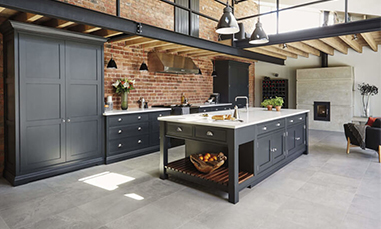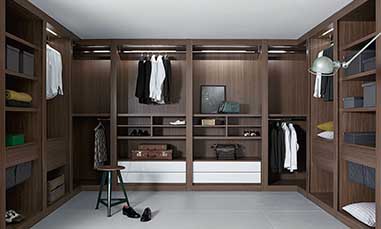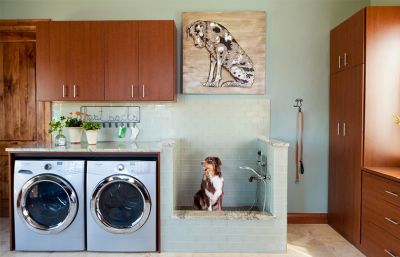



For a one-bed apartment kitchen at mid specification, the 2027 benchmark is about $3,500–5,500 per unit for cabinets only, excluding benchtop, appliances and installation. The range is wide because specification moves cost more than size. Use it to test whether a quote is plausible, not to replace one.
$3,500–5,500 per unit, mid-spec, cabinets only.
Specification moves cost more than size.
Excludes benchtop, appliances and installation.
Compliance is included in the range.
Use it to test a quote, not to replace one.
1. What the benchmark is
A benchmark is a reference point for a budget. It is built from a representative unit type, a defined specification and current costs. It is not a quote, and it should be replaced by one as soon as the design is fixed.
2. Unit and specification
| Produit | référence | Note |
|---|---|---|
| Type d'unité | Appartement 1 chambre | Cuisine uniquement |
| Carcasse | 18 mm, E0/E1 | HMR in wet areas |
| Hardware | Soft-close, 50k+ | Named or equal |
| Portes | Slab or shaker | Mid-range finish |
| Prix | $ 3,500 – 5,500 | Cabinets only |
The specification is deliberately mid-range. A premium door or a stone benchtop moves the number well outside the range.
3. What moves the cost
Door style, hardware brand, finish and order size move the cost more than the unit size. A shaker door with a premium hinge can add 20–30% to a slab door with a standard hinge. A 20-unit order can cost 20–30% more per unit than a 60-unit order, because setup spreads less.
4. What is excluded
Benchtop, appliances, installation, plumbing and electrical are excluded. Each is a separate line, and together they can exceed the cabinet cost. The guide des coûts à l'arrivée shows how to add them.
5. Conformité
The benchmark assumes a compliant board and the standard documents: AS/NZS declaration, board report, labels and packing. Compliance adds a small amount per unit, but it is real and it is included in the range. The guide de conformité lists the documents.
6. Délai de mise en œuvre
The benchmark assumes a 16-week door-to-door schedule. A compressed schedule costs more, either through a production premium or through air freight. The guide des délais de livraison couvre le calendrier.
7. Using the benchmark
Test a quote against the range. A number far below usually means a scope gap; a number far above usually means a premium specification or a small order. Neither is wrong, but both should be explained.
8. Updating the benchmark
Update it annually with current factory, freight and duty inputs. A benchmark that is two years old is a guess. The Australia sourcing guide covers the route inputs.
9. Une liste de vérification avant de s'engager
Avant de signer, veuillez confirmer six points : la qualité du circuit imprimé, le modèle de matériel, le système de finition, les normes d’emballage, le périmètre d’inspection et les modalités de paiement. Chaque point doit être confirmé par écrit, et non par téléphone. La liste de vérification du devis permet de synthétiser ces six éléments en un tableau comparatif d’une seule page.
10. Erreurs courantes
L'erreur la plus fréquente consiste à comparer le prix d'usine avec le coût final. La deuxième est d'omettre l'inspection du budget. La troisième est de payer le solde avant la validation de l'inspection. Chacune de ces erreurs est évitable grâce à un cahier des charges écrit et une inspection avant expédition.
11. Comment mesurer la pièce
Mesurez chaque mur en trois points : en haut, au milieu et en bas, et retenez la plus petite mesure. Les murs sont rarement d'équerre, et une courbure de 10 mm sur trois mètres modifie le remplissage. Mesurez le plafond à chaque angle et repérez les prises électriques, les radiateurs et les canalisations d'évacuation avant de dessiner. Un relevé précis est plus rapide qu'un dessin, et le guide de mesure est fourni avec une fiche imprimable.
13. Liste de contrôle des spécifications
Pour chaque matériau, indiquez quatre lignes : le nom du produit, sa nuance, son épaisseur et le traitement de surface ou de bord. Si le matériau est uniquement désigné par son nom, la nuance est laissée à l’appréciation du fabricant ; or, c’est la nuance qui détermine le coût et les performances.
14. Questions que l'usine posera
Attendez-vous à quatre questions : quelle nuance, quelle épaisseur, quel type de chant et de lot. Les réponses devraient déjà figurer dans le cahier des charges. Dans le cas contraire, l’usine choisira la solution la moins chère conforme au plan.
Foire aux questions
What does the benchmark cover?
A one-bed apartment kitchen at mid specification: cabinets only, excluding benchtop, appliances and installation. It is a budget test, not a quote.
Why a range rather than a number?
Because specification moves the cost more than size. Door style, hardware and finish can move the unit cost by 30–40%.
Is the benchmark for 2027?
It is a forward-looking benchmark based on current costs and expected input inflation. Treat it as a planning figure and update it with a quote.
Does it include compliance?
It assumes a compliant board and the standard documents. Compliance cost is small per unit but real, and it is included in the range.
Does it include installation?
No. Installation is a separate line, typically 10–18% of the cabinet cost.
Comment dois-je l'utiliser?
Test a quote against it. A number far below the range usually means a scope gap; a number far above usually means a premium specification or a small order.