


A hardware specification needs six fields: hinge type and cycle rating, runner type and load, soft-close, brand or approved equal, finish and a schedule line per item. A schedule that lists only a brand is not a specification, because a brand covers several product lines and the factory can choose the cheapest.
Six fields: hinge, runner, soft-close, brand, finish, schedule.
A brand alone is not a specification.
Require published cycle and load ratings.
Match the rating to the use, not the price.
Check model numbers at inspection.
1. Why specify hardware
Hardware is the part of the cabinet that moves, and the part most often substituted. A specification that names only a brand leaves the model to the factory, and the factory will choose the cheapest line that carries the brand. Six fields close that gap.
2. The six fields
| # | Campo | O que declarar |
|---|---|---|
| 1 | Dobradiça | Type, cup size, cycle rating |
| 2 | Corredor | Type, load rating, extension |
| 3 | Fechamento suave | Standard on doors and drawers |
| 4 | Marcas | Marca reconhecida ou equivalente aprovado |
| 5 | Acabamento | Colour and plating |
| 6 | Programação do dia | One line per item with quantity |
Each field should be checkable. If it cannot be checked at inspection, it is a preference, not a requirement.
3. Dobradiças
State the hinge type (full overlay, half overlay, inset), the cup size (usually 35 mm) and the cycle rating. The rating should be published by the maker. A 35 mm cup is standard, which keeps future replacement easy. The estilos de porta guide covers how hinge choice changes with door weight.
4. Corredores
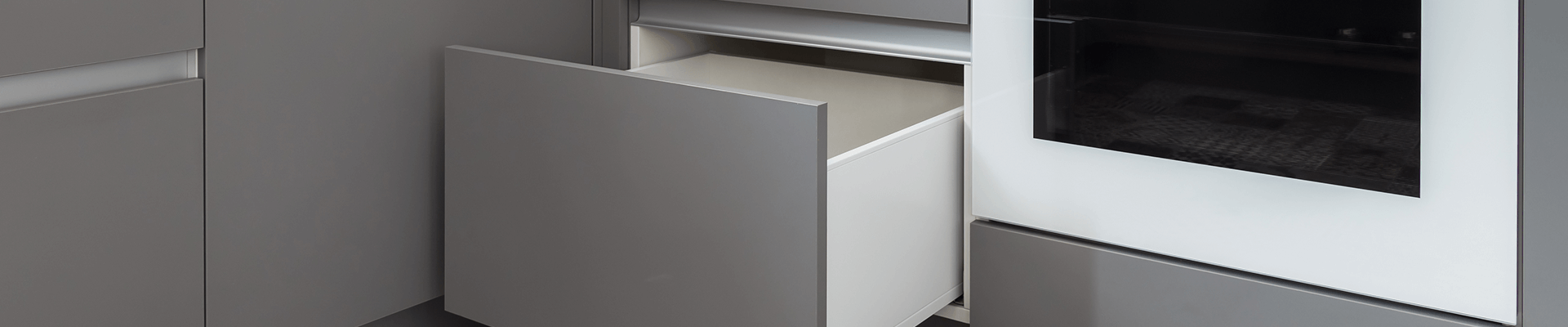
State the runner type (ball-bearing, roller, undermount), the load rating and the extension (full or partial). Undermount runners look better and collect less dust, but cost more. Load rating should match the drawer use: 30–50 kg for pots, 20–30 kg for cutlery.
5. Soft-close and lift-ups
Soft-close should be standard on doors and drawers for residential work. For lift-ups, state the mechanism type and the door weight range, because a lift-up sized for a small door will not hold a large one. The Blum vs generic comparison covers the cost and life trade-off.
6. Brand or approved equal
Name a brand or an approved equal with published ratings. That keeps competition in the tender without losing the performance requirement. If you name a brand, name the model too, otherwise the brand becomes a ceiling rather than a floor.
7. The schedule
One line per item: description, model, quantity, location. A schedule that lists hardware as a lump sum cannot be checked or compared. Ask for it as a separate line in the quote, and attach it to the purchase order.
8. Verificação durante a inspeção
Check the model numbers on the schedule against the items fitted, and photograph the labels. Substitution is common and easy to miss, especially when the substitute looks similar. The hardware comparison explains what to look for.
9. Uma lista de verificação antes de se comprometer
Before you sign, confirm six things: the board grade, the hardware model, the finish system, the packing standard, the inspection scope and the payment schedule. Each should be in writing, not in a call. The quote checklist turns the six into a one-page comparison.
10. Erros comuns
O erro mais comum é comparar o preço de fábrica com o custo final. O segundo é não incluir a inspeção no orçamento. O terceiro é pagar o saldo antes da aprovação da inspeção. Todos esses erros podem ser evitados com um escopo de trabalho por escrito e uma inspeção pré-embarque.
11. Como medir o quarto
Meça cada parede em três pontos: superior, central e inferior, e use a menor medida. As paredes raramente são perfeitamente quadradas, e uma curvatura de 10 mm em três metros altera a medida de preenchimento. Meça o teto em cada canto e anote a localização de tomadas, radiadores e tubulações de esgoto antes de desenhar. Um levantamento com medições economiza mais tempo do que um desenho feito às pressas, e o guia de medição inclui uma versão para impressão.
13. Uma lista de verificação de especificações
Escreva quatro linhas para cada material: o produto, a classe, a espessura e o tratamento da superfície ou da borda. Um material especificado apenas pelo nome deixa a classe a cargo da fábrica, e é na classe que residem o custo e o desempenho.
14. Perguntas que a fábrica fará
Espere quatro perguntas: qual a qualidade, qual a espessura, qual o tipo de borda e qual o lote. As respostas já devem estar na especificação. Caso contrário, a fábrica escolherá, e a opção escolhida será a mais barata que atenda ao desenho.
Perguntas frequentes
What should a hardware specification include?
Six fields: hinge type and cycle rating, runner type and load, soft-close, brand or approved equal, finish and a schedule line for each item.
Is naming a brand enough?
No. A brand can cover several product lines. Name the model or the performance requirement, otherwise the factory can choose the cheapest line within the brand.
What cycle rating should I require?
80,000 cycles or more for high-use kitchens, 50,000 for standard residential. The rating should be published, not implied.
What runner load should I require?
30–50 kg for pots and pans, 20–30 kg for lighter drawers. Match the rating to the use, not to the price.
Should soft-close be standard?
On most residential projects, yes. It reduces noise and door damage, and the cost is small against the cabinet.
How do I check the hardware at inspection?
Check the model numbers on the schedule against the items fitted, and photograph the labels. Substitution is common and easy to miss.