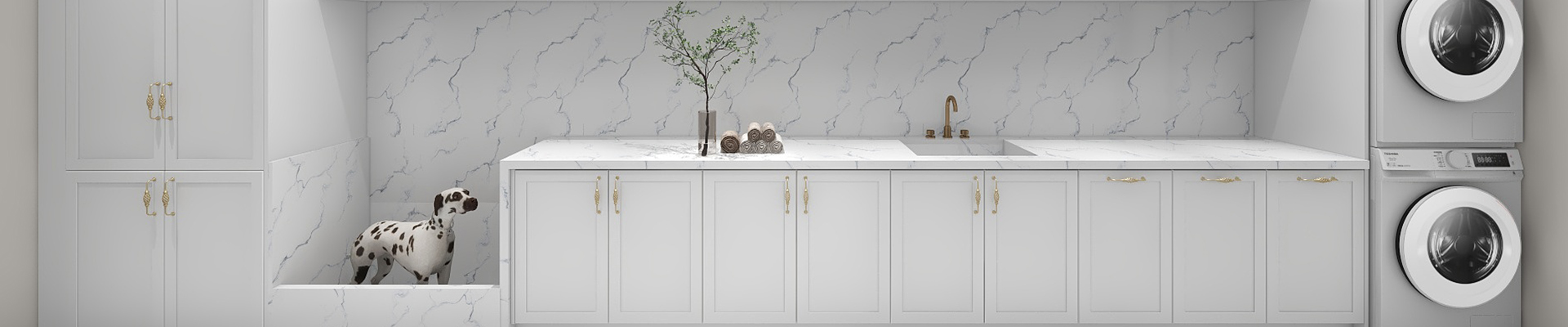



Clean cabinets with a soft cloth and mild soapy water, then dry them. Avoid abrasive cleaners, scouring pads, solvents and steam, because they damage the finish and drive moisture into the edges. Stone benchtops need a pH-neutral cleaner. Check hinges, runners, sealant and edges twice a year.
Soft cloth, mild soap, dry after.
No abrasives, solvents or steam.
Stone needs a pH-neutral cleaner.
Check hinges, runners and sealant twice a year.
Most damage is caused by cleaning, not cooking.
1. Regras gerais
Wipe spills promptly, dry after cleaning, and use a trivet near heat. Most cabinet damage is caused by the cleaner, not the cooking: abrasives scratch, solvents dull, and excess water swells the edges.
2. Cleaner by surface
| superfície | Uso | Evitar |
|---|---|---|
| Laca | Sabonete neutro, pano macio | Solvents, abrasives |
| Melamina | Pano úmido | Esfregões |
| Folheado | Dry or barely damp cloth | Excesso de água |
| pedra | limpador de pH neutro | Acids, bleach |
| Hardware | Roupa seca | Oil unless specified |
The table covers the common surfaces. If a cleaner is not labelled for the surface, test it on a hidden area first.
3. Laca
Lacquer is durable but softer than melamine. Use mild soap and a soft cloth, and dry after. Avoid solvents and abrasives, which dull the sheen. Small marks can be polished out; deep scratches need a touch-up or a door replacement.
4. Melamine and veneer
Melamine wipes clean with a damp cloth; avoid scouring pads, which leave a scratch pattern. Veneer needs less water, not more, because moisture can lift the grain. Dry immediately after wiping.
5. Pedra
Use a pH-neutral cleaner and reseal if the stone requires it. Avoid acidic cleaners, which etch the surface. Wipe wine, citrus and oil promptly, because they stain if left.
6. Hardware
Wipe hardware with a dry cloth. Oil only if the maker specifies it, because the wrong oil attracts dust and gums the mechanism. Check hinges and runners twice a year and adjust rather than force.
7. Stains and chips
Treat stains immediately with the mildest cleaner, then escalate. Small chips can be filled with a colour-matched filler or a lacquer touch-up pen. Deep damage needs a door replacement, which is why a spare door per type is worth storing.
8. Prevenção
Use trivets, wipe spills, keep the extractor running and check sealant twice a year. The wet area guide covers the sealing that matters most, and the finishes guide explains which surface needs which care.
9. Uma lista de verificação antes de se comprometer
Antes de assinar, confirme seis itens: a qualidade da madeira, o modelo do hardware, o sistema de acabamento, o padrão de embalagem, o escopo da inspeção e o cronograma de pagamento. Cada um deles deve ser confirmado por escrito, não por telefone. A lista de verificação do orçamento transforma esses seis itens em uma comparação de uma única página.
10. Erros comuns
O erro mais comum é comparar o preço de fábrica com o custo final. O segundo é não incluir a inspeção no orçamento. O terceiro é pagar o saldo antes da aprovação da inspeção. Todos esses erros podem ser evitados com um escopo de trabalho por escrito e uma inspeção pré-embarque.
11. Como medir o quarto
Meça cada parede em três pontos: superior, central e inferior, e use a menor medida. As paredes raramente são perfeitamente quadradas, e uma curvatura de 10 mm em três metros altera a medida de preenchimento. Meça o teto em cada canto e anote a localização de tomadas, radiadores e tubulações de esgoto antes de desenhar. Um levantamento com medições economiza mais tempo do que um desenho feito às pressas, e o guia de medição inclui uma versão para impressão.
13. Uma lista de verificação de especificações
Escreva quatro linhas para cada material: o produto, a classe, a espessura e o tratamento da superfície ou da borda. Um material especificado apenas pelo nome deixa a classe a cargo da fábrica, e é na classe que residem o custo e o desempenho.
14. Perguntas que a fábrica fará
Espere quatro perguntas: qual a qualidade, qual a espessura, qual o tipo de borda e qual o lote. As respostas já devem estar na especificação. Caso contrário, a fábrica escolherá, e a opção escolhida será a mais barata que atenda ao desenho.
Perguntas frequentes
What should I clean cabinets with?
A soft cloth and mild soapy water, then a dry cloth. Avoid abrasive cleaners, scouring pads and solvents, which damage the finish.
Posso usar um limpador a vapor?
No. Steam drives moisture into edges and joints, which is where the board swells. Wipe with a damp cloth instead.
How do I remove grease?
Mild soapy water first. For stubborn grease, a degreaser labelled safe for the finish, tested on a hidden area.
What about stone benchtops?
Use a pH-neutral cleaner and reseal if the stone requires it. Avoid acidic cleaners, which etch the surface.
How do I handle a chip?
Small chips can be repaired with a colour-matched filler or a lacquer touch-up pen. Deep damage needs a door replacement.
How often should I check the cabinets?
Twice a year: hinges, runners, sealant and edges. A five-minute check catches most problems before they become repairs.