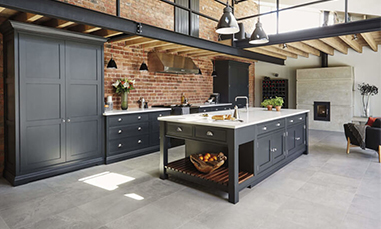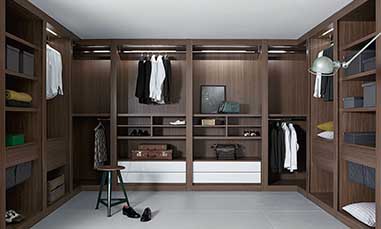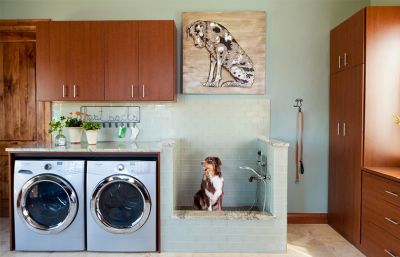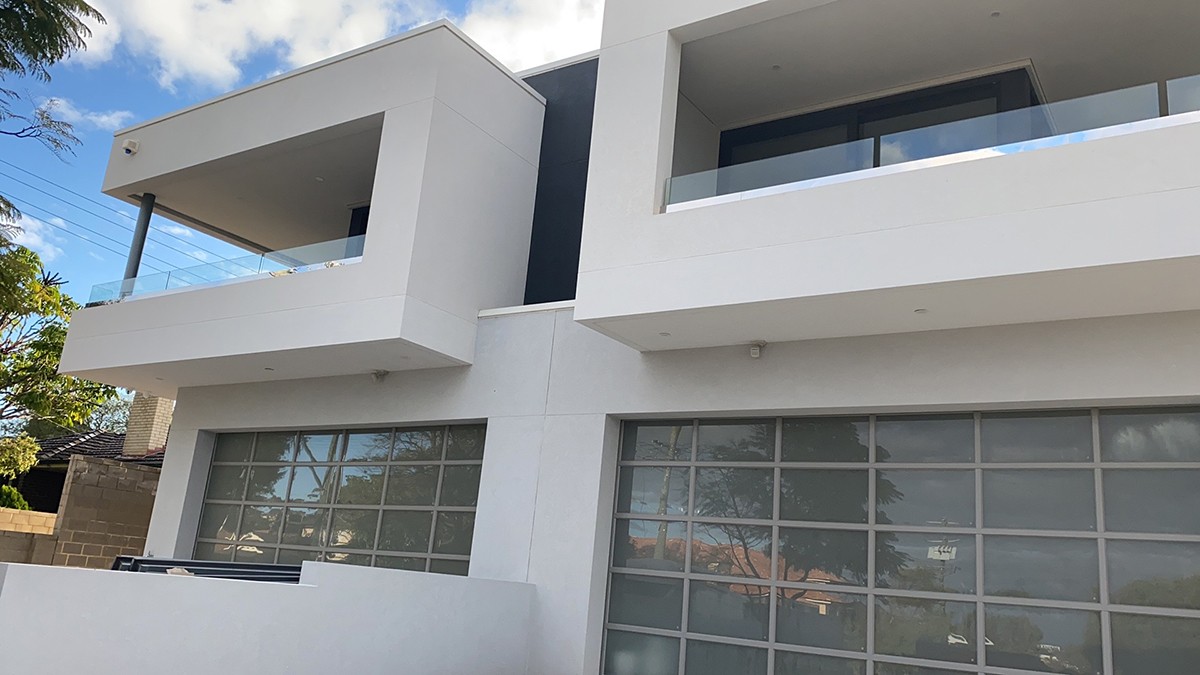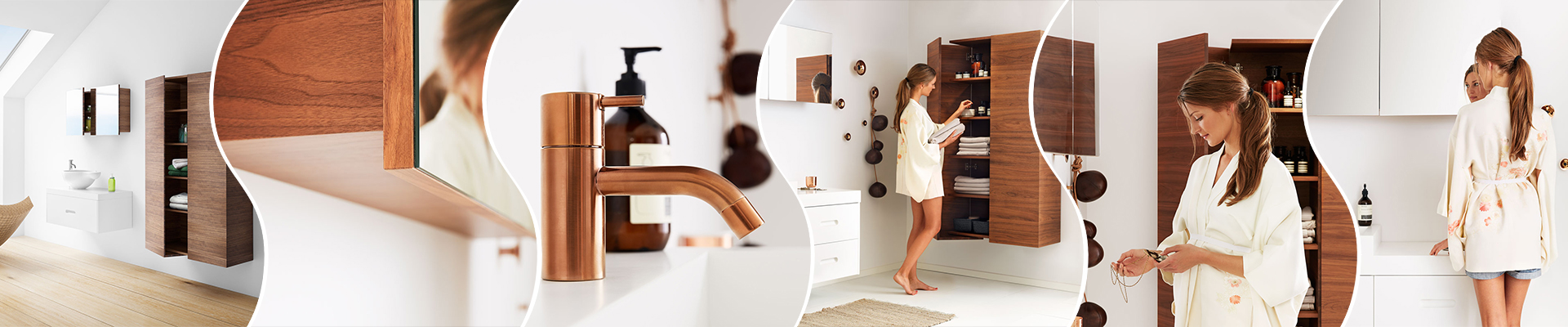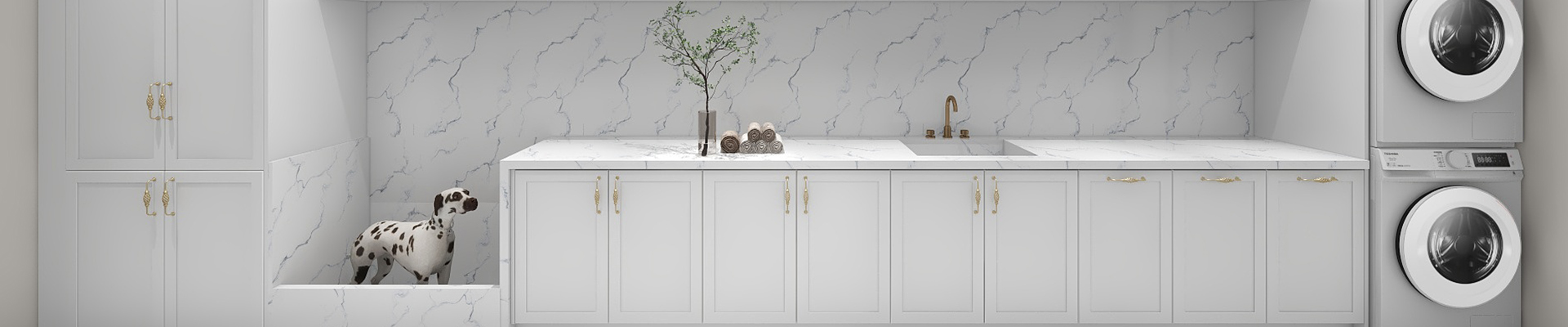



Mélaminé for volume and rental work — cheapest, hardest surface, fails at the edge. HPL where the surface takes real abrasion: benchtops, wet areas, commercial. Laque où couleur profondeur et réparationability matter, and the budget covers a spray line.
These are three different constructions, not three colours: a sprayed film, a resin-soaked paper pressed into the board, and a separate sheet glued on.
Melamine is the hardest of the three day to day and the least repairable — a chipped edge cannot be blended.
HPL is 0.6–1.0 mm of separate sheet. It takes impact and brief heat that melamine will not, and it needs a post-formed or banded edge.
Lacquer is the only one you can touch in on site. That is worth more on a large, expensive door than on a 300 mm cabinet front.
All three fail at the edge first. Whichever you choose, the banding and the edge sealing decide the service life.
1. Three constructions, not three colours
Melamine is decorative paper impregnated with resin and pressed directly onto the board under heat. There is no separate sheet, so nothing can delaminate — it chips instead.
HPL is a self-supporting sheet, 0.6–1.0 mm thick, made from layers of kraft paper and a melamine face, cured under high pressure and then glued to the substrate. That extra step is why it behaves differently at an impact and at a heat source.
Lacquer is a film built up in coats: sealer, build coats, top coat, sanded between. It sits on the surface rather than being part of it, which is what makes it repairable and what makes it vulnerable to a sharp edge.
| Finition | Construction | Face thickness | Réparable |
|---|---|---|---|
| Mélaminé | Paper pressed into the board | 0.8–1.2 mm including overlay | No — patch only |
| HPL | Separate sheet, bonded with adhesive | feuille de 0.6 à 1.0 mm | No — sheet replaced |
| laque PU | Sprayed coats, chemically cured | 0.3–0.5 mm film | Yes, small areas |
2. Wear and heat
Melamine wins the everyday scratch test because the cured resin surface is harder than a paint film. It loses on heat: a warm pan or a heat lamp will cloud it, and it cannot recover.
HPL wins both. The thickness of the sheet distributes an impact and delays heat transfer, which is why it dominates benchtops and commercial kitchens.
Lacquer sits in the middle. A 2K PU film is tough enough for doors and tiroirs, but a knife or a hot pan will mark it — and unlike the other two, the mark can be repaired.
| Propriétés | Mélaminé | HPL | laque PU |
|---|---|---|---|
| Résistance aux rayures | Haute | Haute | Modérée |
| Résistance à la chaleur | Low | Good, brief contact | Modérée |
| Impact at the edge | Puces | Résiste | Chips and marks |
| Repairable on site | Non | Non | Yes, small areas |
| Profondeur de couleur | Printed, repeatable | Printed, repeatable | Deep, custom mixed |
| Coût relatif | Low | Milieu | Mi-hauteur |
3. The real divide is repairability
On a 600 mm cabinet door, replacing a damaged front is annoying but cheap. On a 1,200 mm pantry door or a run of full-height fronts in a matching colour, replacement means a new spray batch and a colour match against everything already installed.
That is where lacquer earns its premium: a scuff can be touched in with the same batch and blended. Keep a small quantity and the batch number, because a re-spray two years later will not match unless the formula is on file.
4. Cost and lead time
Melamine is the cheapest and the fastest, because the finish is applied by the board supplier, not the cabinet factory. There is no spray line, no drying room and no second process.
HPL adds a bonding step and an edge treatment: the sheet has to be cut, glued and trimmed, and the edge post-formed or banded with a matching strip. Lacquer adds the most process — sealer, build, sand, top coat, cure — and it is the only one where a colour has to be mixed.
| Ligne | Mélaminé | HPL | laque PU |
|---|---|---|---|
| Processus de finition | At board mill | Bonding plus edge | Spray line, multiple coats |
| Impact sur le délai d'exécution | Aucun | 1 à 3 jours | 5 à 10 jours |
| Traitement des bords | Bande standard | Post-form or matching band | Bord peint |
| Coût de réparation | Remplacer la porte | Remplacer la porte | Touch-in |
5. Choosing by space
Rental apartment, tight budget: melamine carcass and doors. It will look right for five years and the replacement sables moins coûteux per door is low.
Family kitchen with a stone benchtop: lacquer doors on the visible run, melamine inside. The doors are what the client touches; the interiors are what nobody sees.
Laundry, bathroom or commercial: HPL on the doors and any exposed panel, because those are the spaces where a melamine face lifts within a few years.
Whatever the choice, specify the edge: 1 mm PVC or ABS with a glued and trimmed edge. The face is rarely what fails.
Foire aux questions
Is melamine the same as laminate?
No. Melamine is resin-soaked paper pressed into the board; HPL laminate is a separate 0.6–1.0 mm sheet bonded with adhesive. HPL is tougher and more expensive.
Which finish lasts longest?
On a vertical door in a dry room, all three last decades. In a wet or high-traffic area, HPL lasts longest; in a hot area, lacquer and HPL both beat melamine.
Can lacquer be applied over melamine?
Only with a bonding primer and a sanded key. Direct application fails at the adhesion layer, usually within a year.
Is HPL worth it on kitchen doors?
Rarely — the abrasion resistance is not tested on a vertical face. It earns its cost on benchtops, wet areas and commercial work.
Why does my melamine chip at the edges?
The face is thin and brittle at a cut edge. A 1 mm band with a proper glue line protects it; 0.4 mm tape does not.