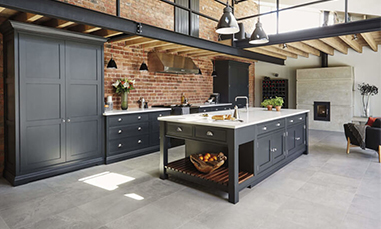



Four styles cover most kitchens: shaker, slab, handleless and raised panel. Slab is the easiest to clean and the lowest cost; shaker is the most versatile; handleless suits modern slab fronts; raised panel is the most traditional and the most expensive. The style decides the cleaning routine and how the kitchen ages.
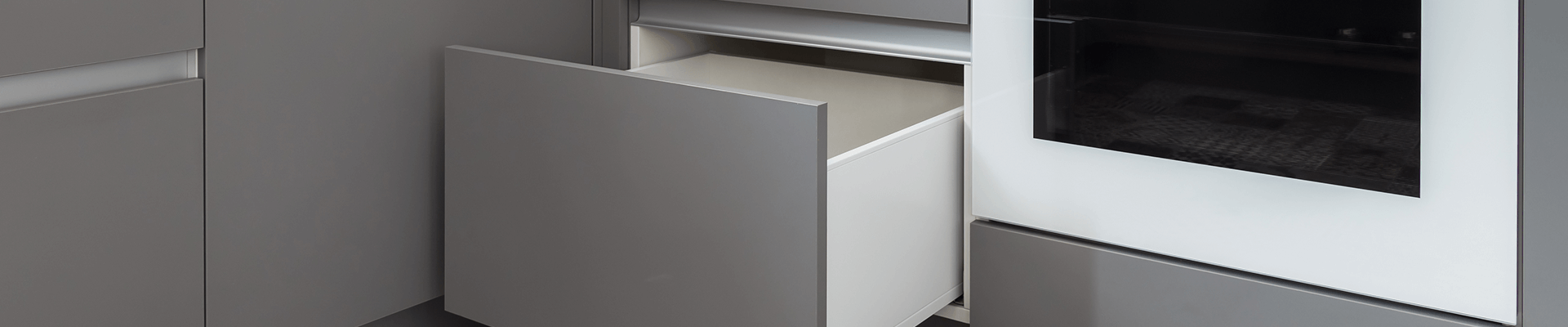
Slab is easiest to clean and lowest cost.
Shaker is the most versatile and hides minor wear.
Handleless needs a slab front and a suitable hinge.
Raised panel costs most and cleans hardest.
Ask for a full-size sample door in the intended finish.
1. The four styles
A door style is a profile and a construction. Shaker has a frame and a recessed panel; slab is flat; handleless removes the handle; raised panel adds a moulded centre. Each changes cost, cleaning and the way the kitchen reads.
2. Comparison
| Style | Look | Cleaning | Cost |
|---|---|---|---|
| Slab | Modern, flat | Easiest | Lowest |
| Shaker | Classic, framed | Easy | Mid |
| Handleless | Minimal, slab | Easy | Mid |
| Raised panel | Traditional | Hardest | Highest |
The table is directional. A shaker with a deep groove cleans harder than a shallow one, and a slab with a finger-pull needs the groove cleaned.
3. Shaker
Shaker is a five-piece door: four frame pieces and a centre panel. It suits traditional and modern rooms, hides minor wear in the frame, and is the most specified style in many markets. The frame width and panel depth decide how traditional it looks.
4. Slab
Slab is a single flat panel, usually MDF or board with a finish. It is the easiest to clean and the lowest cost, and it suits modern kitchens. The edge treatment matters more than the face, because the edge is what you see and touch.
5. Handleless
Handleless removes the projecting handle. It can use a finger-pull groove, a push-open catch or a J-pull profile. It needs a clean slab front and a suitable hinge, and it is harder to open for some users. The hardware specification covers the mechanism.
6. Raised panel
Raised panel adds a moulded centre to a framed door. It is the most traditional and the most expensive, and it collects dust in the mouldings. It suits period properties and formal rooms, not busy family kitchens.
7. Choosing a style
Start with the room and the cleaning routine, then the budget. A busy family kitchen usually suits slab or shaker; a period property suits raised panel; a modern apartment suits slab or handleless. The door finishes guide covers the surface.
8. Specifying a door
Name the style, the frame width or panel depth, the edge treatment and the finish. Ask for a sample door, not a chip, because the profile reads differently at full size. A sample door is the cheapest way to avoid a wrong order.
9. A checklist before you commit
Before you sign, confirm six things: the board grade, the hardware model, the finish system, the packing standard, the inspection scope and the payment schedule. Each should be in writing, not in a call. The quote checklist turns the six into a one-page comparison.
10. Common mistakes
The most common mistake is comparing a factory price with a landed cost. The second is leaving the inspection out of the budget. The third is paying the balance before the inspection is signed off. Each is avoidable with a written scope and a pre-shipment inspection.
11. How to measure the room
Measure each wall at three points, top, middle and bottom, and use the smallest. Walls are rarely square, and a 10 mm bow over three metres changes the filler. Measure the ceiling at each corner and note sockets, radiators and soil pipes before drawing. A measured survey saves more time than a faster drawing, and the measuring guide has a printable sheet.
13. A specification checklist
Write four lines for every material: the product, the grade, the thickness and the surface or edge treatment. A material specified by name alone leaves the grade to the factory, and the grade is where the cost and the performance sit.
14. Questions the factory will ask
Expect four questions: which grade, which thickness, which edge and which batch. The answers should already be in the specification. If they are not, the factory will choose, and the choice will be the cheapest that meets the drawing.
Frequently asked questions
Which door style is easiest to clean?
Slab. There is no frame, recess or groove to trap grease, which is why it suits busy kitchens and rentals.
Is shaker still popular?
Yes. It is the most specified style in many markets because it suits both traditional and modern kitchens and hides minor wear in the frame.
What is a handleless door?
A door with no projecting handle, opened by a finger-pull groove, a push-open mechanism or a J-pull profile. It needs a suitable hinge and a clean slab front.
Which style costs most?
Raised panel, because it needs more machining and assembly. Shaker is mid-range and slab is the lowest cost.
Can shaker doors be used on frameless cabinets?
Yes. Full-overlay shaker doors work on a frameless box. The look is slightly different from a true face-frame shaker.
How do I choose a style?
Start with the room and the cleaning routine, then the budget. Ask for a sample door in the finish you intend, because the profile reads differently at full size.